What Is the Carroll Cognitive Method™?
A Personalized Approach to Cognitive Decline That Combines Precision Medicine, Functional Medicine, and Functional Neurology
If you’ve started forgetting names, losing words in the middle of conversations, repeating questions, struggling to focus, or feeling less mentally sharp than you once did, you may have heard one of two responses:
“It’s just aging.”
Or:
“We’ll keep an eye on it.”
At The Carroll Institute, we believe both responses miss the more important question: Why is this happening?
For decades, most conversations about memory loss focused primarily on diagnosis. Patients were told whether they met the criteria for Mild Cognitive Impairment (MCI), Alzheimer’s disease, or another cognitive condition. Although diagnosis matters, many people leave those conversations feeling frustrated because the diagnosis often does not explain why their brain is struggling.
The Carroll Cognitive Method™ was developed around a different way of thinking. Instead of asking only what diagnosis a person has, we ask: What factors may be contributing to cognitive decline, and how can we help the brain function better?
The Carroll Cognitive Method™ combines Precision Medicine, Functional Medicine, and Functional Neurology to investigate contributors affecting brain health while also supporting cognitive performance through targeted rehabilitation strategies.
Rather than focusing on a single drug, a single lab value, or a single theory of Alzheimer’s disease, this method seeks to understand the unique factors affecting each individual. Then, the care team can create a personalized roadmap designed to support brain health, cognitive function, and long-term resilience.
Why This Question Matters
Many families arrive at our clinic after months or years of uncertainty. In many cases, they have noticed memory changes, difficulty concentrating, slower processing speed, increasing brain fog, or challenges with everyday tasks. Often, they have already searched online, spoken with friends, or consulted multiple healthcare providers.
What they want most is clarity.
Unfortunately, one of the biggest misconceptions about cognitive decline is the belief that memory loss is simply a normal part of aging. While memory concerns become more common with age, common does not necessarily mean normal.
For example, when someone begins forgetting appointments, struggling to find words, losing track of conversations, making unusual financial mistakes, or feeling mentally slower than before, the brain may be signaling that something deserves attention.
So the question is not simply whether a diagnosis exists. The more useful question is: Why is the brain losing function?
That question sits at the heart of the Carroll Cognitive Method™.
Understanding the Carroll Cognitive Method™
The Carroll Cognitive Method™ is the clinical framework developed by Garland Glenn, DC, PhD, AFMC, at The Carroll Institute in Sarasota, Florida.
The method integrates three disciplines that many clinics use separately: Precision Medicine, Functional Medicine, and Functional Neurology. Each discipline contributes a different piece of the puzzle. Together, they create a more complete approach to understanding cognitive decline.
Precision Medicine: Why Is This Brain Struggling?
Precision Medicine begins with a simple observation: people who share the same diagnosis often have very different underlying contributors.
For instance, two individuals may both receive a diagnosis of Mild Cognitive Impairment or early Alzheimer’s disease, yet the factors affecting their brains may look completely different. One person may struggle with insulin resistance and poor metabolic health. Another may have significant sleep disruption. Meanwhile, a third may be dealing with chronic inflammation, hormonal changes, vascular issues, toxin exposure, or nutritional deficiencies.
In many cases, several contributors are present at the same time. Therefore, Precision Medicine recognizes that cognitive decline is often multifactorial rather than the result of one isolated cause.
Potential contributors may include chronic inflammation, insulin resistance, blood sugar dysregulation, sleep disorders, hormonal imbalances, nutritional deficiencies, chronic stress, mold exposure, environmental toxins, vascular dysfunction, gut health disturbances, and chronic infections.
The goal is not to assume every patient has the same problem. Instead, the goal is to determine which factors may be most relevant for a particular individual.
Functional Medicine: Investigating Root Causes
Once clinicians identify potential contributors, Functional Medicine provides the tools to investigate and address them.
Traditional healthcare often focuses on matching a diagnosis with a treatment. Functional Medicine asks a different set of questions: Why is inflammation elevated? Why is blood sugar unstable? Why is sleep disrupted? Why are symptoms developing in the first place?
This systems-based approach looks for the mechanisms affecting health rather than focusing only on symptoms. As a result, it can uncover patterns that may otherwise go unnoticed.
For cognitive decline, that distinction matters. Addressing contributors such as inflammation, metabolic dysfunction, poor sleep, nutritional deficiencies, and hormonal imbalances may help create an environment that better supports brain health.
However, identifying root causes is only part of the equation.
Functional Neurology: How Can We Help the Brain Perform Better?
This is where the Carroll Cognitive Method™ differs from many other approaches.
Imagine someone suffers a significant ankle injury. As swelling decreases and inflammation improves, the tissue begins to heal. Those are important developments. Yet most people understand that healing alone does not automatically restore strength, coordination, balance, and performance.
In other words, rehabilitation is often necessary. The brain is no different.
Many patients improve sleep, optimize nutrition, reduce inflammation, and address other biological contributors. Nevertheless, they may still report brain fog, slower thinking, memory problems, difficulty concentrating, or reduced mental stamina.
At that point, another question becomes important: How well is the brain functioning right now?
Functional Neurology focuses on evaluating and improving nervous system performance. Assessments may include eye movements, balance, coordination, attention, processing speed, sensory integration, cognitive performance, and brain network function.
These findings reveal areas of relative neurological weakness that may benefit from targeted rehabilitation.
What Most People Are Never Told About Neuroplasticity
One of the most important discoveries in modern neuroscience is neuroplasticity.
Neuroplasticity refers to the brain’s ability to adapt, reorganize, and strengthen neural pathways throughout life. For many years, scientists believed the adult brain was largely fixed. Today, however, we know the brain remains dynamic.
Every time a person learns a new skill, practices a task, develops a habit, or acquires new information, neural networks adapt. We see examples of neuroplasticity in stroke rehabilitation, concussion recovery, language learning, musical training, and skill development later in life.
Similarly, clinicians can apply these principles to cognitive rehabilitation. Through targeted exercises and brain-based rehabilitation strategies, specific neural pathways can be challenged and strengthened.
Ultimately, the goal is not simply to remove obstacles to brain health. The goal is to help the brain perform better.
Why Cognitive Decline Is Often More Complex Than People Realize
One of the biggest misconceptions about Alzheimer’s disease and cognitive decline is the belief that they result from a single problem.
Many people have heard that Alzheimer’s disease is caused by amyloid plaque accumulation. While amyloid remains an important area of research, growing evidence suggests that cognitive decline often involves multiple interacting factors rather than one isolated cause.
Think about a house with a leaking roof. Over time, water enters the structure. Eventually, mold develops. If you remove the mold without fixing the roof, the problem usually returns.
Similarly, the brain may be responding to multiple ongoing stressors at the same time. Inflammation, metabolic dysfunction, toxin exposure, poor sleep, hormonal changes, vascular problems, and other contributors may all influence cognitive performance.
For that reason, the Carroll Cognitive Method™ was designed around the understanding that many patients require a broader investigation than a single explanation can provide.
From ReCODE to Precision Medicine
Many people familiar with cognitive decline treatment have heard of the ReCODE Protocol developed by Dr. Dale Bredesen.
Garland Glenn completed ReCODE training in 2017 and incorporated those principles into his work helping patients with cognitive decline. Over time, however, the field continued to evolve.
Although many patients still recognize the ReCODE name, researchers increasingly use the broader term Precision Medicine to describe individualized, systems-based approaches to cognitive decline.
The underlying philosophy remains similar: every patient deserves an individualized investigation into the factors affecting brain health. What has changed is the amount of research, clinical experience, and scientific understanding now available.
The Carroll Cognitive Method™ builds upon these Precision Medicine principles while adding a component that many programs do not emphasize to the same degree: Functional Neurology and neuroplasticity-based rehabilitation.
What the Research Shows
The field of Precision Medicine for cognitive decline has advanced significantly over the past decade.
One of the most important developments was the EVANTHEA randomized controlled trial involving individuals with Mild Cognitive Impairment and early Alzheimer’s disease.
Unlike many previous studies that focused on a single intervention, researchers evaluated a personalized Precision Medicine program that addressed multiple contributors simultaneously. These included metabolic health, inflammation, sleep, hormones, nutritional status, exercise, cognitive training, and environmental factors.
Participants receiving the personalized intervention demonstrated significant improvements across multiple measures of cognition and daily function when compared with standard care.
Importantly, the study suggested that addressing several contributors at the same time may produce more meaningful outcomes than focusing on one factor alone.
No study guarantees results for every patient. Even so, findings such as these support the broader concept that personalized, systems-based approaches deserve serious consideration.
The RECLAIM, RESTORE, RENEW Framework
The Carroll Cognitive Method™ follows a structured process built around three phases: RECLAIM, RESTORE, and RENEW.
RECLAIM
The first phase focuses on discovery. During this phase, we ask: Why is this particular brain losing function?
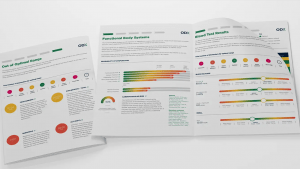
Rather than guessing, this phase gathers data and builds a clearer picture of what may be affecting cognitive performance. Evaluation may include cognitive testing, functional neurology assessments, laboratory analysis, metabolic evaluation, sleep assessment, hormonal evaluation, and other investigations designed to identify contributors affecting brain health.
The goal is to create a root-cause map that can guide the next phase of care.
RESTORE
Once clinicians identify key contributors, attention turns toward intervention.
Because every patient is different, treatment plans are personalized rather than standardized. This phase may involve nutrition strategies, sleep optimization, inflammation reduction, blood sugar support, cognitive rehabilitation, functional neurology exercises, and other individualized therapies.
The objective is to remove obstacles while restoring what the brain needs to function optimally.
RENEW
The final phase focuses on long-term resilience.
Long-term brain health requires ongoing attention. Therefore, this phase emphasizes sustainability, prevention, and the habits that help patients maintain progress over time.
Patients learn strategies designed to monitor changes, protect gains, and build routines that support brain health for years to come.
What Makes the Carroll Cognitive Method™ Different?
Many clinics focus primarily on diagnosis. Others focus mainly on lifestyle interventions. Still others focus on cognitive exercises.
The Carroll Cognitive Method™ integrates all three major components. Precision Medicine identifies contributors. Functional Medicine addresses root causes. Functional Neurology helps rehabilitate brain networks.
This integrated approach reflects Dr. Glenn’s background in engineering, Functional Neurology, and Precision Medicine. It also reflects his belief that cognitive decline should be approached as a complex systems problem rather than a single-disease process.
Perhaps the simplest way to describe the Carroll Cognitive Method™ is this:
Precision Medicine asks: Why is the brain struggling?
Functional Neurology asks: How can we help it function better?
The Carroll Cognitive Method™ combines both questions into one comprehensive strategy.
Who Should Consider the Carroll Cognitive Method™?
This approach may be appropriate for individuals who have Mild Cognitive Impairment (MCI), early Alzheimer’s disease, persistent brain fog, worsening memory problems, concerns about future cognitive decline, or a family history of dementia. In addition, it may be appropriate for people who want a comprehensive evaluation of brain health and are willing to actively participate in their care.
In general, earlier intervention creates more opportunities than waiting until symptoms become severe.
Next Steps
If you have noticed memory changes, increasing brain fog, difficulty concentrating, slower thinking, or concerns about cognitive decline, do not automatically assume it is “just aging.” The earlier contributing factors are identified, the more opportunities may exist to support brain health and cognitive performance.
A comprehensive evaluation can help determine whether there are modifiable factors affecting memory, attention, processing speed, and overall cognitive function. You may have more options than you’ve been told.
If you are in Sarasota, the Gulf Coast region, or looking for a deeper evaluation of memory loss, brain fog, or cognitive performance, Book a discovery call to see if this is a fit for you. Or learn more about our Carroll Cognitive Method™ and ReCODE program.
Sources & Citations
- EVANTHEA Precision Medicine Trial – Preprints.org
- ReCODE-Based Precision Medicine Framework – The Carroll Institute
- The Carroll Institute Precision Medicine Program Overview – The Carroll Institute
- Brain Health And Cognitive Decline Resources – National Institute on Aging
- Alzheimer’s Disease And Mild Cognitive Impairment Information – Alzheimer’s Association
Medically reviewed by Dr. Garland Glenn, DC, PhD, IFM, AFMC
Last updated: June 7, 2026
This content is for educational purposes and does not substitute personalized medical advice.

Dr. Garland Glenn, DC, PhD, IFM, AFMC
Founder & Clinical Director, The Carroll Institute — Sarasota, FL
Dr. Garland Glenn is a board-certified chiropractic physician and functional medicine practitioner specializing in cognitive health, neurodegeneration, and root-cause medicine. Certified as an AFMC (Advanced Functional Medicine Clinician) and Institute for Functional Medicine (IFM) trained, he has also completed over 500 hours of advanced training in Functional Neurology under Dr. Ted Carrick, founder of the Carrick Institute.
At The Carroll Institute, Dr. Glenn leads Sarasota’s only ReCODE-certified Functional Neurology program, helping patients reverse or prevent cognitive decline through the Bredesen ReCODE Protocol, neuroplasticity exercises, and personalized functional medicine care.
Learn more about his background and approach at About Dr. Garland Glenn.
– schedule now –
free discovery call
To help you get started, we offer a free 20-minute Discovery Phone Consultation. During this call, you will be able to talk with one of our Certified Brain Health Coaches about what going on with you or your loved one and find out if we can help. Please review our FAQs prior to scheduling your free call. We look forward to talking with you soon and helping you Save Your Brain.
(yes, it’s totally free!)
ReCODE® is a registered program developed by Dr. Dale Bredesen and licensed through Apollo Health. Dr. Garland Glenn is a certified ReCODE practitioner.